
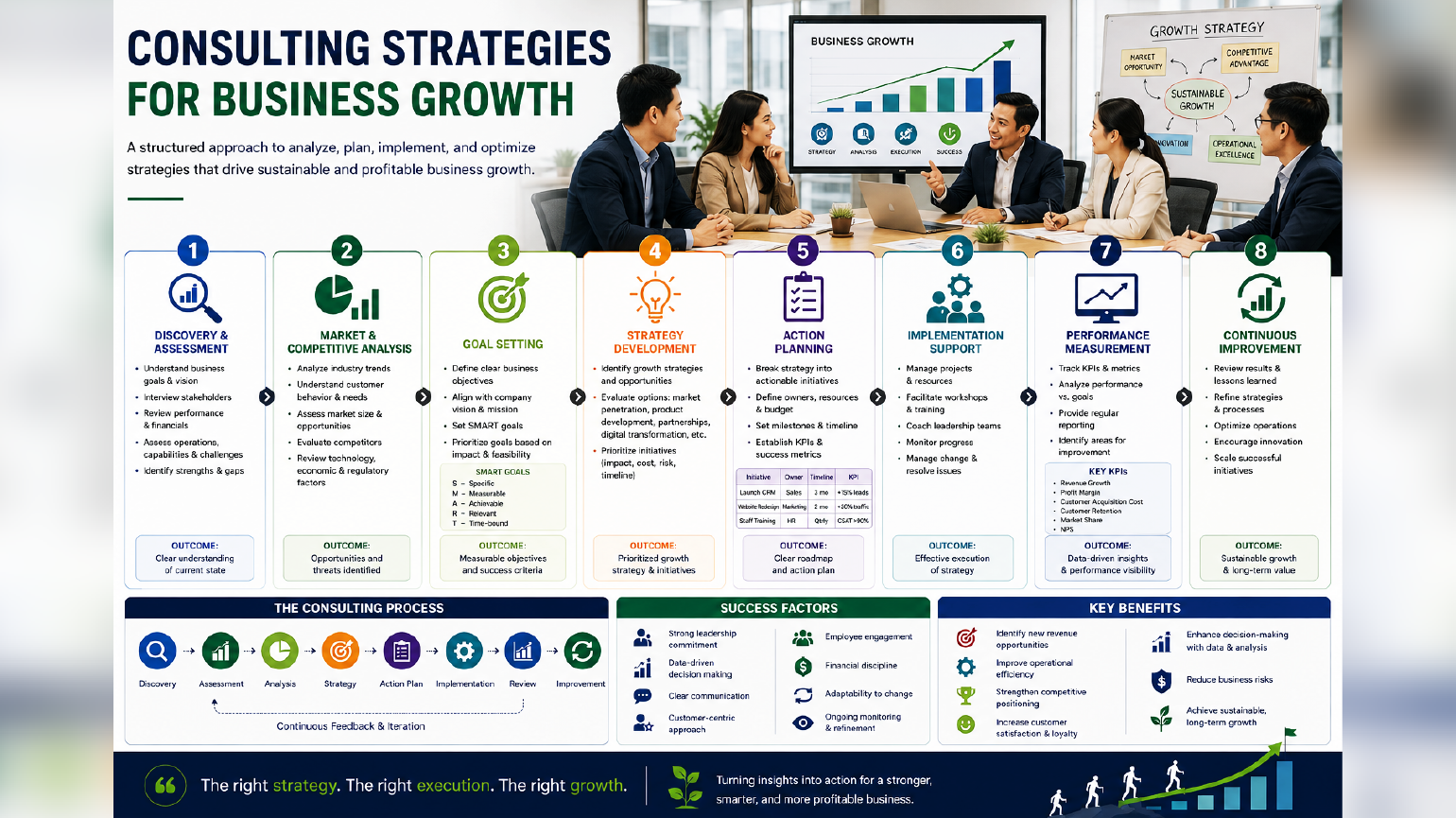
Businesses often hit a roadblock not because of poor products, but because of too many random decisions made based on guesswork. As a result, goals shift, costs rise for no apparent reason, and the business’s direction becomes unclear.
This problem is very common among MSME owners and businesses that are scaling up. Business consulting can help you see these obstacles more clearly and then choose the most sensible next steps.
Here’s a summary of what a Business Growth Consulting Strategy entails, how it works, and how to choose the right service for your needs.
When a Business Grows Without Direction
Without a clear strategy, a business can easily become busy yet fail to make progress. Processes become disorganized, sales fluctuate, margins shrink, and teams operate according to inconsistent standards. That’s why an objective perspective from an outside party helps identify key issues more quickly.
Signs You Need a Consultant
Stagnant revenue is the most obvious sign. Often, business owners get bogged down in day-to-day operations, reports are difficult to interpret, and team targets go unmet. If decisions are still based on instinct, guidance is essential.
Data Is More Powerful Than Assumptions
Good decisions require data on sales, costs, customers, and processes. Data helps eliminate guesswork, minimize risk, and direct your efforts toward areas that will have the greatest impact.
How Consulting Drives Growth
A consulting strategy starts with the business’s actual conditions, not with theories that sound good on paper. Consultants identify obstacles, set priorities, and then design practical solutions. The desired outcomes are clear: more organized processes, stronger sales, and clear direction for business owners.

Audits to Identify Obstacles
Audits typically cover operations, finance, marketing, and the team. The goal is not to add to the workload, but to identify the root causes of problems that will incur the highest costs if left unaddressed.
Strategies Tailored to the Business Stage
New businesses require market validation and a solid value proposition. Established businesses usually need to focus more on improving margins, sales systems, or preparing for branch expansion.
Actionable Plans
Strategies must be broken down into weekly targets, key performance indicators, and task assignments. Teams will move faster if the direction is simple and measurable.
Choosing the Right Service
Choose a consultant who understands your industry. Big promises are appealing, but clear working methods, scope, and costs are far more important.
Check Their Track Record
Review case studies, portfolios, or experience working with similar businesses. Relevance is more valuable than a big name that may not necessarily understand your challenges.
Prioritize Clear Communication
A good consultant explains issues and priorities in simple terms. This allows you to make quick decisions without getting bogged down by technical jargon.
Mistakes When Implementing Strategies
Consulting outcomes often fail not because the advice is bad. The problem lies in half-hearted execution, expectations of instant results, or a team that isn’t brought along in the change process.
Thinking “Once Is Enough”
Consulting provides direction; then the business needs to monitor and adjust its steps. Healthy growth stems from the habit of refining decisions.
Going in Without Data
From the start, lay out the actual numbers and real problems. Without sufficient data, recommendations can easily miss the mark and waste time.
Conclusion
Business growth through consulting isn’t just about seeking advice. What you’re buying is direction, efficiency, and sharper decision-making.
When viewed as a long-term investment, consulting helps a business move up to the next level in a more measured way.